Monster High Fangtastic Life
- 4.5
- Rating
- 1.00M
- Installs
- Free
- Price

 Analysis by App-foxy
Monster High Fangtastic Life is the kind of role-playing game I would hand to a child who enjoys dressing up characters, cooking, and creating little stories rather than chasing difficult goals. I spent time with it as a casual dollhouse-style experience, and my first impression was clear: its appeal comes from playful interaction and familiar Monster High personality, not from deep strategy or demanding progression.
That distinction matters before downloading. Budge Studios has made this a free game for children and families, with an Everyone age rating and support for devices running Android 5.1 or later. It has reached over a million installs and holds a 4.3 average from around 13 thousand ratings, so it is clearly finding an audience. Still, popularity does not automatically make it suitable for every child. The best fit is someone who likes open-ended pretend play and can accept that some parts of the experience may be limited unless an adult approves purchases.
What the game feels like in everyday use
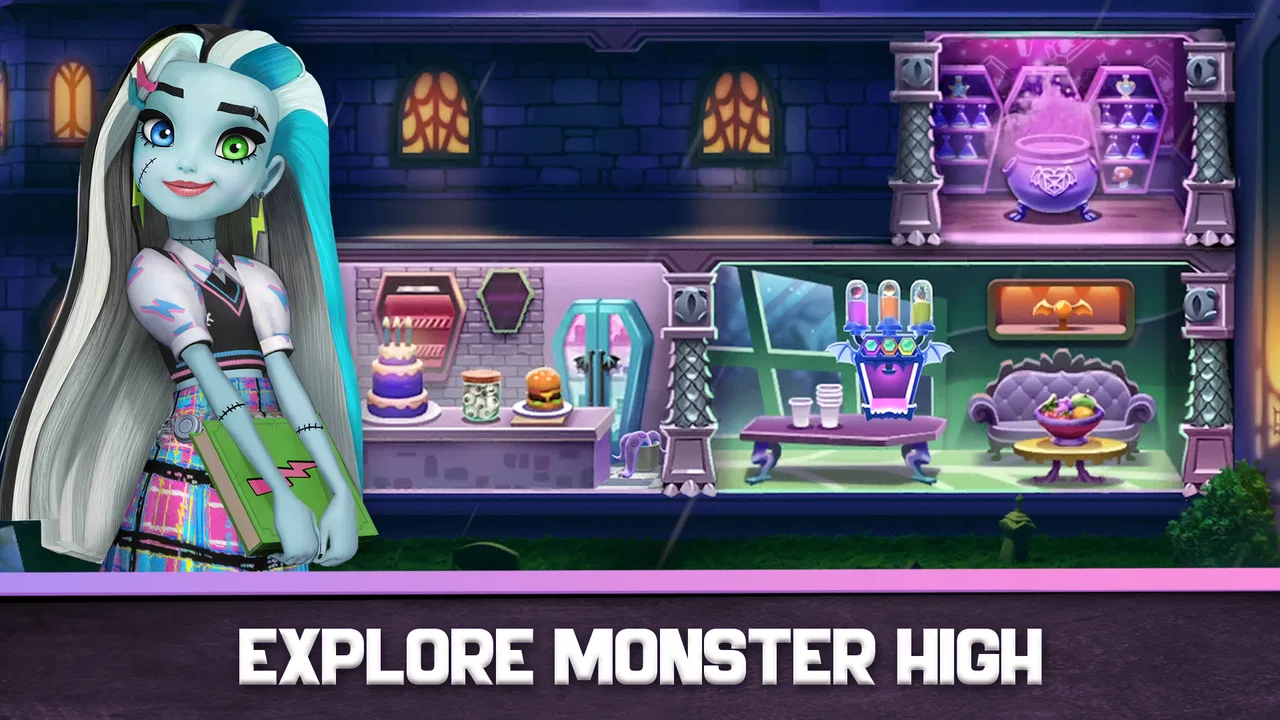
The central pleasure is making small choices and seeing the world respond. Instead of treating each session like a conventional adventure with combat, complicated objectives, or a long story campaign, I approached it as a digital playset. Clothes, food, characters, and themed activities give children reasons to tap around and invent their own scenes.
You May Also Like

 Blood Strike: 2.5 Anniversary
Blood Strike’s Loadouts Turn Every Drop Into a Tactical Gamble
A close look at Blood Strike’s custom loadouts: how fast access to signature weapons reshapes its battle royale rhythm, rewards preparation, and narrows the gap between fights.

 Pandora - Music & Podcasts
Pandora’s Music Is Easy to Start, but Harder to Recover
Pandora’s strength is its low-effort path from a seed to a station. Its weak spot is how much confidence it asks you to place in connection, setup, and quiet recovery.

 8 Ball Pool
 Is Built on Rivalries, Rematches, and Routine
A close look at the rivalries, rematches, shared routines, and unanswered safety questions that turn a quick pool match into a persistent mobile community.

 Samsung Music
’s Quiet Strength Is Playing What You Already Own
Its reach comes less from spectacle than from dependable access to a personal library. That simplicity is both the app’s strongest retention engine and its ceiling.

 AccuWeather: Weather Radar
AccuWeather Review: A Quick, Clear Forecast for Everyday Decisions
For everyday plans, the best forecast is the one you can understand quickly. AccuWeather makes rain timing, radar, and local conditions easy to act on, with a few trade-offs.

 Hill Climb Racing
Why Hill Climb Racing Still Turns Crashes Into One More Run
A tiny car, a bumpy hill and one more upgrade: Hill Climb Racing keeps resurfacing because its simple chaos makes every near-miss feel personal.
More From Our News Desk
View All News


That makes it easy to pick up for a short break. A child can open the game, change a character’s look, prepare something, and move on without remembering a complicated control scheme. I found that more approachable than many role-playing games aimed at younger players, where progress can depend on reading instructions carefully or repeating the same challenge until it is solved.
The Monster High theme also gives the presentation a distinctive identity. The spooky styling is playful rather than frightening, which fits the Everyone rating. Children who already enjoy the characters will probably understand the attraction immediately, while newcomers may need a little time to decide whether the unusual fashion and monster-inspired setting are their kind of thing.
One useful way to think about it is as a combination of a dress-up activity and a light cooking game wrapped in a character-based world. It is not the right download if you want a role-playing game with tactical battles, character statistics, or a substantial plot. It is better for imagination, experimentation, and short creative sessions.
Where young players can get stuck
The first point of friction is not necessarily difficulty. It is expectation. A child who sees “role-playing” and expects a traditional adventure may wonder why the game feels more like a collection of interactive activities. I would explain the format before handing over the device: the goal is to play with the world, not to win a long series of missions.
Another possible sticking point is choice overload. Dress-up and cooking activities are simple, but a young player may still pause when several objects or characters are available. Rather than taking over, I found it more useful to suggest one small task, such as choosing an outfit first and leaving the rest for later. This keeps the opening session manageable and lets the child discover the rest naturally.
Touch controls can also create confusion when a child taps quickly or presses the wrong area. If something does not appear to react, slowing down and trying one deliberate tap is a better first step than repeatedly touching the screen. Closing menus completely before selecting another activity can also prevent the feeling that the game has stopped responding.
There is a practical family issue as well: free-to-start games can include optional purchases. The listed in-app purchase price is $9.99 per item, so I would not let a child explore the game on an unsupervised payment-enabled device. This is not a reason to reject the game, but it is a reason to establish the household rule before play begins. A child should know which items are available during free play and that an adult handles any purchase decision.
Setup checks that save time
Before blaming the game for a poor first session, I would check the device itself. The minimum operating system is Android 5.1, but meeting a minimum does not guarantee that every older phone or tablet will feel equally comfortable. A larger screen is generally easier for small hands, especially when a child is selecting clothing or interacting with several objects.
I also recommend starting with the device charged and with other demanding apps closed. This is basic advice, but it matters more for children because a sudden interruption feels like the game has failed. If the device is shared, make sure the child is opening the intended profile or app installation rather than an older copy that may behave differently.
On a first launch, I would sit nearby for a few minutes and identify the main activity areas together. That short introduction answers several questions at once: where to begin, how to return from a scene, and which choices are simply playful rather than permanent progress. It also gives an adult a chance to explain the purchase boundary without making the whole experience feel like a warning.
For families using a device with multiple users, it is worth checking who controls downloads and payments before play starts. I would also avoid handing over a phone while an unrelated update, call, or notification is likely to interrupt the session. These are not Monster High-specific defects, but they are common reasons a child reports that a simple game is “broken.”
The current version is 2025.1.1, and the game was released on December 16, 2024. If the app behaves strangely after installation, I would first confirm that the installation completed normally and that the device has enough working space for ordinary app operation. I would not immediately delete the game, because that can remove local progress or force a child to repeat the initial setup.
A calmer workflow when something goes wrong
My preferred recovery method is simple and predictable. First, leave the current activity and return to the main game area. Then try the same action once more with slower taps. If the problem remains, close the app normally, reopen it, and test a different activity before repeating the original one.
This sequence helps separate a one-time touch mistake from a broader problem. If clothing works but cooking does not, the issue may be limited to that scene. If every area feels unresponsive, the device or the installation deserves attention instead. Keeping those two situations separate prevents unnecessary frustration and makes it easier to describe the problem accurately to an adult.
I would avoid rapidly switching between several activities while troubleshooting. Children naturally explore by tapping everywhere, but that makes it difficult to know what caused the trouble. A better routine is to change one thing at a time: finish a menu, return to the main area, open one activity, and wait for the screen to settle.
If the app closes unexpectedly, relaunching it once is reasonable. If it repeatedly closes in the same place, I would stop asking the child to retry and move to general device checks. Restarting the device, confirming that the operating system is supported, and making sure the app is installed normally are safer first steps than repeatedly tapping through the same sequence.
Progress is another reason to be cautious with recovery. I would not clear app storage or uninstall immediately, particularly if a child has spent time creating outfits or scenes. Those actions can affect saved information. A restart and a fresh test are less disruptive, and an adult can decide later whether more drastic troubleshooting is worthwhile.
When the app may not be the cause
Some problems that look like game issues actually come from the device. Delayed touch response can be caused by a dirty screen, a thick screen protector, wet fingers, or a device struggling with several apps at once. Before concluding that the controls are poor, I would test the screen in another ordinary app and clean it gently.
Sound complaints can also be misleading. The device may be muted, connected to headphones, or set to a low media volume even though other alerts are audible. Checking the physical mute setting and media volume is more useful than reinstalling the game. If sound works elsewhere but not here, then the game deserves closer attention; if it fails everywhere, the device is the more likely explanation.
Slow loading can come from an older handset, limited free space, or background activity. The game is designed for young players, but that does not mean every low-powered device will provide the same smooth experience. I would close video apps, pause large downloads, and restart the device before judging the game itself.
There is also a difference between a locked choice and a malfunction. In a free game with optional purchases, a child may see an item that cannot be used without an adult-approved transaction. That is not the same as a broken button. Explaining the difference helps prevent repeated tapping and keeps the child from assuming that every attractive item should be immediately available.
For parents, the most useful test is to reproduce the issue calmly without the child’s rapid tapping. If the same screen fails after a clean restart and careful selection, record what happened in plain language: the activity opened, the action selected, and the result. That is much more helpful than saying only that the game does not work.
How it compares with familiar alternatives
Compared with a traditional role-playing game, this one is far less demanding. There is no reason to study combat systems or plan a character build, which makes it more welcoming for younger children. The trade-off is that older players looking for challenge, exploration, or measurable advancement may lose interest quickly.
Compared with a standard dress-up app, the Monster High setting gives the activity more personality. The fashion choices are not presented in a blank studio; they belong to a themed world with cooking and playful character interaction around them. That extra context can encourage storytelling, although children who prefer realistic fashion may not connect with the monster-inspired style.
Compared with a pure cooking game, the food activities are part of a wider play experience rather than the entire purpose. This variety is useful when a child tires of changing outfits, but it also means the game may feel less focused to someone who wants recipes and kitchen challenges above everything else.
I see the strongest advantage in the combination. A child can move from visual creativity to a simple hands-on activity without having to learn a completely different game. The main limitation is depth: families should choose it for accessible pretend play, not as a substitute for a richer adventure or a more demanding creative tool.
Who will enjoy it, and who should skip it
I would recommend it to children who already like character play, costumes, spooky-but-friendly designs, and making up situations for dolls or figures. It also suits siblings or a parent and child who want to share a short session, because discussing outfits and invented stories can be more enjoyable than silently chasing a score.
It is especially practical for a child who becomes discouraged by complicated games. The activities are approachable, and there is room to play without treating every mistake as a failure. A short after-school session could work well: the child chooses a character, creates an outfit, tries a cooking activity, and then puts the device away without needing to complete a lengthy quest.
I would skip it for a child who wants competitive play, deep progression, or a large world to explore. I would also look elsewhere if the main goal is educational cooking instruction, because the appeal here is imaginative interaction rather than teaching a structured set of real kitchen skills. Families who dislike optional purchase prompts should also choose a game with a different payment model.
Adults should consider the child’s relationship with branded characters, too. The familiar Monster High identity is a strength for fans, but it may be the least interesting part for a child who has never encountered the series. In that case, a more neutral dollhouse or creativity app could make more sense.
Small habits that improve the experience
I found that giving each session a tiny theme works better than asking a child to explore everything at once. “Create a look for a party” or “prepare something for the characters” gives direction while leaving plenty of freedom. It also makes it easier to stop after a natural endpoint instead of continuing until the child is tired.
Another useful habit is to let the child explain what happened rather than immediately correcting every choice. The value of this game is partly in the story the player invents around the actions. If an outfit seems unusual or a cooking result becomes silly, that is often the moment when pretend play becomes more engaging.
For shared devices, I would keep the game in a predictable place and agree on a simple rule: ask before selecting anything that appears to involve a purchase. This removes uncertainty without turning every session into a technical lesson. It also makes the free price easier to understand: downloading costs nothing, while individual optional items can cost $9.99.
Finally, I would treat the game as a short creative activity rather than an endless background distraction. That approach highlights its best qualities and reduces the chance that a child becomes frustrated by repeating the same actions or searching for a deeper progression system that is not the point of the experience.
My practical verdict
Monster High Fangtastic Life is a friendly, accessible role-playing game built around character creativity, themed fashion, cooking, and playful scenes. I like it most when I view it as a digital playset: open it for a small idea, experiment, and leave when the story feels finished. Its Everyone rating and free entry make it easy for families to try, while the broad install base and 4.3 average suggest that the format works for many players.
My recommendation comes with two conditions. First, an adult should handle purchase settings because optional items are priced at $9.99 each. Second, expectations should be set correctly. This is not a deep adventure, a competitive game, or a serious cooking simulator. It is a themed creative space for children who enjoy making choices and inventing their own fun.
If that sounds like the kind of play your child already enjoys, I think it is worth trying on a suitable device. Begin with a supervised introduction, keep the first session focused, and use the calm recovery steps above if something feels stuck. If your child wants challenge, strategy, or a long-form story, I would choose another role-playing game instead. For imaginative Monster High fans, though, Budge Studios has made a pleasant free starting point that is easy to understand and enjoyable in small doses.
FAQs for Monster High Fangtastic Life
01What is Monster High Fangtastic Life about?
Monster High Fangtastic Life is a simulation game where players can create and manage their own Monster High student. The game allows you to engage in various activities such as attending classes, participating in extracurriculars, and forming friendships. It's designed to immerse players in the spooky, yet fun, world of Monster High.
02Is Monster High Fangtastic Life free to play?
Yes, Monster High Fangtastic Life is free to download and play. However, it offers in-app purchases for players who wish to enhance their gaming experience. These purchases can include exclusive items, character boosts, and additional customization options. Be sure to monitor spending if children are playing.
03What platforms is Monster High Fangtastic Life available on?
Monster High Fangtastic Life is available on both Android and iOS platforms. You can download it from the Google Play Store for Android devices and the Apple App Store for iOS devices. Ensure your device meets the necessary system requirements for optimal performance.
04Can I play Monster High Fangtastic Life offline?
Monster High Fangtastic Life requires an internet connection to play. This is essential for accessing all game features, updates, and social interactions. Offline gameplay is not supported, so make sure you have a stable connection to fully enjoy the game’s content and community features.
05Is Monster High Fangtastic Life suitable for children?
Monster High Fangtastic Life is designed with a younger audience in mind, featuring themes and activities suitable for children. The game promotes creativity, social interaction, and fun. However, due to in-app purchases, parental supervision is recommended to manage spending and ensure a safe gaming environment.
Pros
- Engaging storyline with diverse characters.
- Stunning graphics and vibrant animations.
- Intuitive controls suitable for all ages.
- Frequent updates with new content.
- Offline play available for uninterrupted fun.
Cons
- In-app purchases can be expensive.
- Requires a lot of storage space.
- Occasional bugs disrupt gameplay.
- Some levels feel repetitive.
- Limited parental controls available.

Monster High Fangtastic Life
Gallery